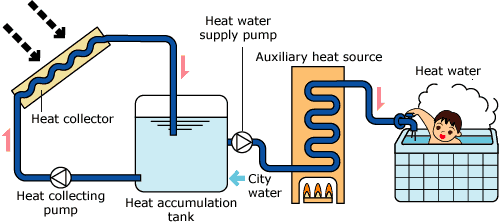
<<back || index || next>> Solar ThermalJapanese Solar Thermal FactsThe use of solar heat soared in the 1980's, shortly after the second oil crisis. The decrease in new installation comes from the high costs. Most of the systems are installed in hospitals and public institutions. Now the solar thermal industry is developing new technologies, such as integrated into roofs and other building materials, and hybrid system combining solar thermal technology and photovoltaics technology. (NEF -Renewable energy in Japan http://www.nef.or.jp/english/act06PU01pdf/part01-03.pdf) 7/30/03 Japanese Solar Thermal SystemsThe Japanese solar thermal program is focused on active solar thermal processes (e.g., systems to provide heat and hot water for industrial processes). Relatively little attention appears to be paid to passive building design research because the Japanese government believes that this is a fairly mature technology that requires little further research. The active solar thermal program is focused on the development of systems that are capable of using solar energy to provide either heating or cooling applications for use in areas of high insulation (e.g., work is underway on a solar freezing/refrigerating system that would provide cooling to -10 °C for use in desert areas). The program is also attempting to transfer solar heat energy utilization technologies formerly developed under this program to industry and to developing nations (e.g., an industrial dehydration system for wood products utilizing an air heating collector is being developed and deployed for use in Indonesia). (Energy Research and Development http://energytrends.pnl.gov/japan/ja005.htm) 7/29/03 Solar Thermal UtilizationThe solar heat equipment has higher energy exchange ratio and has better cost-effectiveness with relatively lower price among other new Energy sources. We have various types in solar heat system, such as room heater/cooler with water heater system, industrial solar system, solar heat power generation system, combined heat and electric power solar system. All in all, in order to expand solar heat application, we have developed many kinds of technologies that enable us to use the collected solar heat in various fields, and we expect further dissemination because of the increasing awareness of global environmental issues in recent years. A: Water Heater System
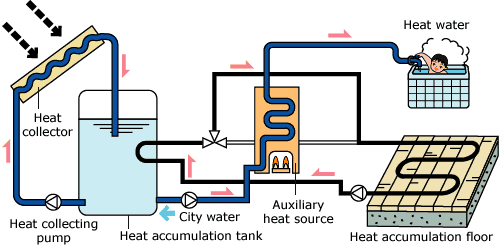
B: Room Heater/Water Heater System (Floor Heater)
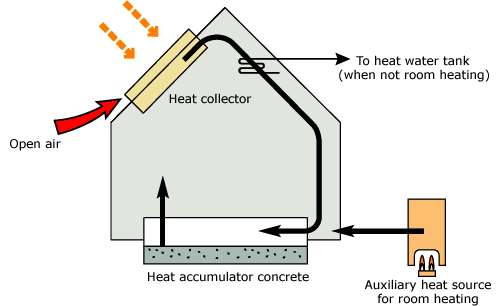
C: Room Heater, Water Heater System (Air Heater)
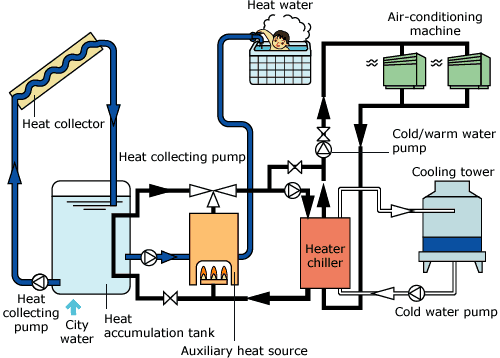
D: Room Heat/Cool-Water Heater System
(Agency for Natural Resources and Energy http://www.enecho.meti.go.jp/english/energy/new_energy/solar.html) 8/20/03 MechanismsThese systems use the sun to heat either water or a heat-transfer fluid, such as a water-glycol antifreeze mixture, in collectors generally mounted on a roof. The heated water is then stored in a tank similar to a conventional gas or electric water tank. Some systems use an electric pump to circulate the fluid through the collectors. Solar water heaters can operate in any climate. Performance varies depending, in part, on how much solar energy is available at the site, but also on how cold the water coming into the system is. The colder the water, the more efficiently the system operates. In almost all climates, you will need a conventional backup system. In fact, many building codes require you to have a conventional water heater as the backup. (Energy Efficiency and Renewable Energy http://www.eere.energy.gov/erec/factsheets/solrwatr.html) 7/29/03 BenefitsThere are many benefits to owning a solar water heater, and number one is economics. Solar water heater economics compare quite favorably with those of electric water heaters, while the economics aren't quite so attractive when compared with those of gas water heaters. Heating water with the sun also means long-term benefits, such as being cushioned from future fuel shortages and price increases, and environmental benefits. Solar water heaters do not pollute. By investing in one, you will be avoiding carbon dioxide, nitrogen oxides, sulfur dioxide, and the other air pollution and wastes created when your utility generates power or you burn fuel to heat your household water. When a solar water heater replaces an electric water heater, the electricity displaced over 20 years represents more than 50 tons of avoided carbon dioxide emissions alone. Carbon dioxide traps heat in the upper atmosphere, thus contributing to the "greenhouse effect" Solar water heaters offer long-term benefits that go beyond simple economics. In addition to having free hot water after the system has paid for itself in reduced utility bills, you and your family will be cushioned from future fuel shortages and price increases. (Energy Efficiency and Renewable Energy http://www.eere.energy.gov/erec/factsheets/solrwatr.html) 7/29/03 The Average Water Temperature of Solar Thermal Systems
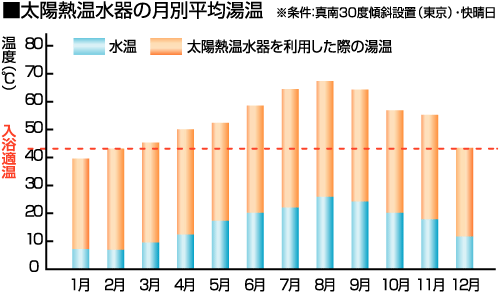
Blue bar- tap water Orange bar- solar assisted temperature Using solar thermal system, the water temperature goes about 60 °C (140 °F). This water temperature can provide warm air and hot water in one household. (New Energy Foundation http://www.nef.or.jp/what/whats02.html) 8/20/03 Existing Organizations and Associations
<<back || index || next>> |