 The High-wire Act of Integrating RenewablesBonneville Power provides within-hour balancing services for windMay 19, 2011 - John R. Johnson - renewablesbiz.com Renewable energy from the sun, wind and other sources is moving onto the grid at a rapid pace, often in response to aggressive renewable portfolio standards (RPSs) adopted at the state level. In Oregon, the latest RPS requires that the largest utilities in the state provide 25 percent of their retail sales of electricity from clean and renewable energy sources by 2025. California has one of the toughest RPSs in the nation, calling for one-third of the power produced by utilities to be from renewable sources by 2030. So although the rush to renewables ensures a cleaner
environment and one that doesn't rely as much on
volatile fossil fuels, the green energy movement
also puts tremendous pressure on utilities to integrate
those renewables into the traditional electricity
mix. There are numerous complicated issues to tackle,
such as how to balance those disruptive power supplies,
and the cost and load factors involved. At Portland, Ore.-based Bonneville Power Administration (BPA), wind power has increased from 500 MW in 2005 to 3,450 MW of power last year. "It's been explosive growth and heavily driven by renewable portfolio standards in Oregon, Washington and California," said Elliot Mainzer, BPA's vice president of corporate strategy. Mainzer said BPA's current projections call for another doubling in wind power over the next two to three years. "It's really just massive growth," he said. "You kind of get the feeling that policy is passed sometimes without really understanding what the implications are." The implications are time-consuming and costly to utilities that must make adjustments to IT and operations procedures that have been in place for years. At BPA, about 85 percent of the 3,450 MW of wind that is interconnected to its transmission system is moved across the grid and sold to other utilities in the Northwest. BPA's primary role is to provide within-hour balancing services for wind projects. In order to do so, BPA adjusts the output of its hydro generation system up and down to account for varying renewable generation. As a result, it must carry significant reserves in order to make sure the amount of wind energy scheduled is delivered to the customer. Of course, that's easier said than done, so BPA has begun to place a large emphasis on wind forecasting in order to gain better visibility into renewable generation. "Obviously, if we knew what the wind was going to do any particular hour, it would really impact the amount of reserve capacity that we carry on the system," said Mainzer. "But, of course, we don't have perfect information." Better forecasting will help ease the visibility issue, especially considering that much of the wind power is harvested in one region-the heart of Columbia River plateau. Wind comes surging in from the coast and through the Columbia River gorge, hitting many turbines simultaneously. Likewise, wind production often drops off dramatically as wind departs the area. The wide variability is difficult to manage and requires a significant amount of reserve capacity on BPA's hydro system. In order to achieve better visibility, BPA last year installed 14 wind anemometers throughout the Pacific Northwest to help track wind patterns and get a better view into wind history. The data provided about wind patterns 100 feet in the air aids the forecasting programs. Essentially, better forecasting allows BPA to hold less water in reserve behind the dams, saving ratepayers money and also providing a better option for the environment. Mainzer said that BPA is looking at ways to integrate the data collected from wind forecasting into its planning models and dispatch models and to develop software programs for its system operators so they can get a clearer picture of what they believe their wind levels will look like for the next hour. "So there is a lot of integration into your
core system operations software from that forecasting
that we are beginning to look at," he said. Another IT-intensive challenge associated with integrating renewables is the use of shorter transmission scheduling intervals, or intra-hour scheduling. Typically, electricity is scheduled on an hourly basis, which means utilities must carry reserves across the entire hour in order to make sure enough energy is provided during that one-hour window. Dramatic shifts in wind production, for example, require storing a significant amount of reserve capability to absorb those fluctuations. To lessen the impact, BPA is considering moving from hourly scheduling to 30-minute scheduling, which would ease the problem but also create many complicated changes to BPA's scheduling systems. "There is a lot of IT involved in those traditional scheduling systems," said Mainzer, "like scheduling the tagging of the energy between the balancing authorities. Eventually you start to get close to your core operational software-your AGC systems and your other core operation systems." There have even been discussions around the country about requiring transmission providers to actually move from 30-minute scheduling to 15-minute intervals, which would result in even greater infrastructure change. "We've just now taken the hood off the engine
to try and figure out how dramatic a change that
would be and how much additional infrastructure
would be needed in terms of automation, scheduling
and tagging," said Mainzer. In addition, automatic
generation control (AGC) systems, billing and metering
would all be impacted by the shorter scheduling
system. Mainzer says the next challenge for BPA is to harvest all of the additional data it is gathering and to put it to use in building its own internal forecasting system. That forecasting would then be channeled directly into the heart of BPA's operation. Mainzer said that most wind generators-whether they are owned by independent power producers or utilities-forecast and schedule their own wind across BPA's system. The resulting problem is that BPA is never quite sure whether what they are scheduling will match what they are forecasting. Improved supply chain visibility is the buzzword in many industries today, and it's no different in this case. "We don't have great visibility into their forecasts, which creates additional uncertainties for our operators," he said. "So we're talking about the possibility of all working off the same forecasting system and the same scheduling system so we won't have to guess at what they schedule and have to carry additional reserves to deal with that volatility. "It's about bringing the forecasting into the heart of our operations and then developing a centralized forecasting sys-tem that people can use for better scheduling," said Mainzer. "That is really the next frontier." As the deadlines for renewable portfolio standards draw closer, Mainzer believes it's crucial for regulators, utilities and state and federal agencies to work closely together to ensure that environmental goals can be met without causing too much upheaval to existing utility systems. "We're experiencing massive growth," he said. "Increasingly as we scale up, we'll need much greater collaboration and dialogue between policymakers and the utility community about how to implement a lot of these programs." 
|
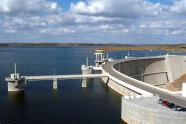 As more emphasis is put on going green and weaning
the U.S. off expensive and dirty fossil fuels,
utilities continually find themselves at the focal
point of green energy initiatives.
As more emphasis is put on going green and weaning
the U.S. off expensive and dirty fossil fuels,
utilities continually find themselves at the focal
point of green energy initiatives.