More states harness power of renewable energyAug 22, 2007 - Jordan Schrader - USA Today
RALEIGH, N.C. — Some focus on the sun, others on the wind, and at least one includes a role for pig power. While the particulars vary, state laws requiring electric utilities to use renewable energy sources to help curb greenhouse-gas emissions and meet growing power demands are rapidly becoming the norm. Laws in Washington, New Hampshire and Oregon are less than a year old. On Monday, Gov. Mike Easley signed a bill into law in North Carolina. Exactly half of the states are now on board, and Congress is mulling a national measure. The new law in North Carolina, like many of the others, will mean that a percentage of the electricity powering homes five years from now will come from the sun and other renewable sources, including, in this case, pig waste. Following the states' lead, the House of Representatives voted this month for a 15% standard for electric utilities nationwide. The requirement would go to President Bush for approval if it makes the cut when the House and Senate merge their energy legislation.
"We're seeing a dramatic upswing in the interest in renewable energy from the general public," said Dave Hollister, co-founder of Sundance Power Systems in Mars Hill, N.C. "Ultimately what's going to happen is if the utilities don't do it, the people are going to do it anyway and the utilities are going to be left on the sideline."
It's uncertain how the laws will affect electrical rates, University of Michigan public policy professor Barry Rabe said. The North Carolina law, similar to laws passed in 24 other states and the District of Columbia, requires utilities to produce 7.5% of their electricity using renewable energy resources by 2021 and to satisfy an additional 5% of demand with either more renewables or reduced energy use. It allows an increase in a home energy bill of up to $34 a year. North Carolina's utilities predict more than $1 billion in higher rates over a decade. But consumers could end up saving hundreds of millions of dollars instead, if power companies take advantage of a part of the law that encourages energy efficiency, according to a study by Boston consulting firm La Capra Associates. Renewable resources are defined differently in each state, but primarily as cleaner alternatives to coal that do not produce as much greenhouse gases. In addition to the states that have passed renewable energy standards, three — Illinois, Virginia and Missouri — have non-binding goals. The utilities can build generating plants themselves, or they can contract with firms such as Sundance Power Systems. "We had wind- and solar- and wave-power industries contacting us, champing at the bit to get here," said Oregon state Sen. Brad Avakian, a Democrat, "and I just have no question this is going to be a great new industry for the state." For Texas, fulfilling the targets for renewable energy production in its 1999 law has been, quite literally, a breeze. With abundant open space for windmills, the state met its earliest goal and has raised its target to about 5% of the state's demand by 2015.
Texas' law is expected to keep 3.3 million tons of carbon dioxide, or the output of about 750,000 midsize cars, out of the atmosphere every year, according to the Pew Center on Global Climate Change. Such resources don't exist everywhere. Roughly a third of states with the laws don't appear to be on track to comply with them, Rabe said. For example, renewable sources are required to satisfy 20% of California's energy thirst by 2010. "Clearly, they're not going to get there," he said. That raises the question of whether states will adjust their goals downward or use taxpayers' money to subsidize those efforts, Rabe said.
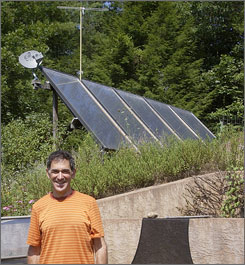
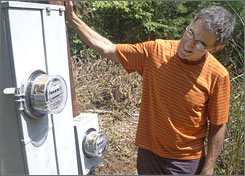
Massachusetts companies in 2005 met their interim requirement of 2%, according to a state report this year, in part because they're allowed to pay the state in lieu of actually producing all of the renewable energy. Rabe said local opposition to a wind farm in Nantucket Sound shows it can be difficult to find power sites. Environmentalists such as Richard Fireman of Mars Hill, regional director for environmental group North Carolina Interfaith Power and Light, are skeptical of using such untested fuels as animal waste, and wrinkle their noses even more at lawmakers' concessions to power companies. Helping utilities build coal-powered plants, which the new law will do by letting the companies recover costs from consumers more quickly, only worsens global warming, Fireman said. "We're under a time constraint here before we pass several tipping points that are going to prevent us from really mitigating climate change," said Fireman, who powers his home in the Blue Ridge Mountains in part with solar panels. Duke Energy spokeswoman Paige Sheehan said the booming state needs traditional power alongside renewable energy. "We will never be able to generate all the power that we need with just renewables," Sheehan said. Schrader reports for the Asheville (N.C.) Citizen-Times |