The Need for a National Smart GridOct. 1, 2011 - Duncan Gromko - leadenergy.org
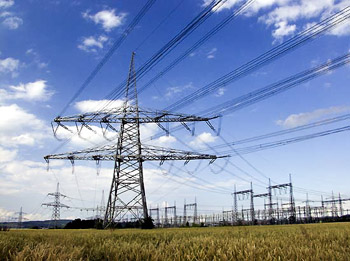
Current grid technology is antiquated and leaves the entire American economy vulnerable to attacks. A number of sources in 2009 reported that hackers from China or Russia have infiltrated the power grid, enabling them to disrupt distribution. Sabotaging a power plant or critical transmission lines could disable the whole system. As a recent article by Kevin Bullis argues, such attacks would be relatively simple, given the antiquated technology our grid relies upon. While most of us imagine this threat coming in the form of a terrorist attack, Bullis points out how the energy markets create an incentive to attack the grid for economic gain. The 2003 blackout in the Northeast highlighted another of the problems with the current electricity transmission and distribution infrastructure: failure in one part of the system can quickly spread, making the grid susceptible to costly power disruptions. A study prepared for the Department of Energy found that power outages and interruptions cost Americans at least $150 billion per year. Different industries are impacted more or less severely; for example, a brokerage operation loses $6,480,000 per hour of power interruption, while a semiconductor manufacturer loses $2,000,000. Unfortunately, the current system is prone to such debilitating interruptions because of the way regional grids are connected – radially. According to Clark Gellings and Kurty Yeager:
Furthermore, power disruptions are not the only cost of our antiquated electricity infrastructure. A Joint System Coordination Plan found that transmission congestion costs electricity consumers in the eastern United States $16.5 billion per year. According to EIA forecasts, electricity sales in the United States will increase by 50% by 2030, further straining an already overworked system. In addition to economic costs and security concerns, our current electrical infrastructure has an environmental impact as well. Globally, electricity accounts for 32% of fossil fuel use and 41% of energy related CO2 emissions. Electricity use is expected to increase, adding to the carbon footprint of electricity generation. The current grid limits our potential to reduce the environmental impact of electricity because it does not effectively connect energy consumers with possible renewable energy sites; at this moment large-scale integration of renewable energy as an electricity source is impossible. Most of the United States’ solar energy potential is in the Southwest, while most of the onshore wind energy potential is in the Great Plains, and neither of these regions are close to a majority of energy consumers. Without transmission lines connecting these renewable energy sources to population centers, this energy potential is wasted. Additionally, the current system makes it harder for small-scale renewable generators to sell power to the grid. The impact of tax credits for renewable energy, then, is limited without an improved grid.
The smart meter symbolizes another important aspect of a smart grid. A smart meter and smart appliances would allow for two-way communication exchange between the utility and the consumer. Two-way communication would enable consumers to reduce their energy costs by changing consumption patterns. Peak demand would be reduced by as much as 3.7 billion kWh per year. Furthermore, improved communication would also allow utilities to respond more quickly to power outages. Better communication within the grid would make average citizens both consumers and producers of energy. One application of this technology is the use of electric plug-in vehicles as a giant, dispersed battery for the grid. The intermittent nature of renewable energy means that there are peaks and valleys in generation. Plug-in vehicles could help smooth out these variations and eliminate the need for costly, large-scale energy storage. Additionally, increasing the number of electricity generators and storage centers would make the grid less susceptible to massive blackouts and attacks by hackers. The economic and ecological benefits of a new national electricity infrastructure are evident. By improving efficiency, reducing peak demand and protecting against power outage spillovers, a Smart Grid could add $15 to $20 billion per year to the US economy by 2020. Additionally, a $100 billion investment could create nearly 2 million jobs during tough economic times. In terms of carbon emissions, a Smart Grid would have a dramatic effect. By promoting smarter energy use and through efficiency savings, the Smart Grid could directly cut CO2 emissions by as much as 0.85 Gt/year – the equivalent of shutting down 650 coal plants. Most of the emissions savings associated with a Smart Grid are enabled by other technologies such as intermittent renewables and electric vehicles. These indirect measures could push total emissions cuts to 2.2 Gt CO2 or 1,700 coal plants. Any plan for significantly reducing GHG emissions includes the adoption of renewable energy on a large-scale. Without a grid that connects renewable sources to the consumer and smoothes the intermittent nature of renewables, these efforts will prove fruitless..  |