SA solar research eclipses rest of the worldFebruary 11, 2006 - Willem Steenkamp - Saturday Argus In a scientific breakthrough that has stunned the
world, a team of South African scientists has developed
a revolutionary new, highly efficient solar power
technology that will enable homes to obtain all their
electricity from the sun.
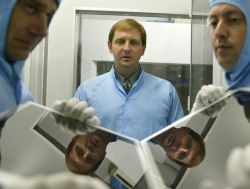
A team of scientists led by University of Johannesburg (formerly Rand Afrikaans University) scientist Professor Vivian Alberts achieved the breakthrough after 10 years of research. The South African technology has now been patented across the world. One of the world leaders in solar energy, German company IFE Solar Systems, has invested more than R500-million in the South African invention and is set to manufacture 500 000 of the panels before the end of the year at a new plant in Germany. Production will start next month and the factory will run 24 hours a day, producing more than 1 000 panels a day to meet expected demand. Another large German solar company is negotiating with the South African inventors for rights to the technology, while a South African consortium of businesses are keen to build local factories. The new, highly efficient and cheap alloy solar panel is much more efficient than the costly old silicone solar panels. International experts have admitted that nothing else comes close to the effectiveness of the South African invention. The South African solar panels consist of a thin layer of a unique metal alloy that converts light into energy. The photo-responsive alloy can operate on virtually all flexible surfaces, which means it could in future find a host of other applications. Alberts said the new panels are approximately five microns thick (a human hair is 20 microns thick) while the older silicon panels are 350 microns thick. the cost of the South African technology is a fraction of the less effective silicone solar panels. Alberts said in Switzerland it was already compulsory for all new houses to include solar technology to lessen energy demands on national grids. "And that was the older, less effective technology. With our hours of sunlight, we will on average generate twice as much energy than, for instance, European countries." While South African scientists developed and patented the new, super-effective alloy solar panels, other companies have developed new, super-efficient storage batteries and special converters to change the energy into the power source of a particular country (220 volts in South Africa).

|