
German Chancellor questions solar’s future
Oct. 5, 2011 - Chris Whitmore - pv-tech.org
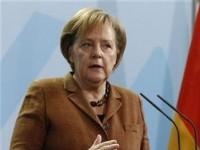 German
Chancellor Angela Merkel has dealt a blow to Germany’s
flagging
downstream sector by questioning its credibility
as a commercially viable energy source and calling
for a further cut to its feed-in tariff (FiT). German
Chancellor Angela Merkel has dealt a blow to Germany’s
flagging
downstream sector by questioning its credibility
as a commercially viable energy source and calling
for a further cut to its feed-in tariff (FiT).
Merkel made the comments at a regional conference
for her Christian Democrat party in Magdeburg, where
she also suggested that in future the government
would forgo the domestic PV market in favour of solar
energy from countries with high irradiance levels.
Over the last few years, Germany has started to
wean its solar industry off government support by
gradually reducing FiT rates. However, in 2011 the
industry has begun to stagnate, with many experts
blaming this decline on subsidy cuts in several of
Europe’s leading PV markets.
Yet despite the problems solar has endured in 2011,
the Chancellor’s dismissal of the German market – which
is the world’s leader with nearly 18GW of installed
capacity – as not commercially viable appears
rather strange.
Last month, Greek Prime Minister Georges Papandreou
confirmed that Germany was exploring the possibility
of importing solar-generated electricity from his
debt-ridden country. But, with Greece’s PV
industry still in a state of relative immaturity,
this option would not appear to offer an immediate
threat to domestic producers.
An additional stumbling block to the Chancellors
plans to mothball solar is the nuclear situation.
By 2022, Germany
will close all of its nuclear plants,
which currently account for around 23% of national
energy production, and, despite Merkel’s protestations
to the contrary, many government
and industry insiders have already earmarked solar
to fill this void.

|