 Wind and Avian Issues ExaminedJun 04, 2010 - Bill Opalka - renewablesbiz.com The National Wind Coordinating Collaborative (NWCC) just reviewed one of the more vexing issues confronting wind power development. The paper, "Wind Turbine Interactions with Birds, Bats, and their Habitats: A Summary of Research Results and Priority Questions," provides a literature review of previous NWCC research and peer-reviewed studies on the subject. The document shows the state-of-the art in three cogent sections that guide current thinking on the subject. The "What Studies Have Shown" section is conclusions supported by peer-reviewed studies and on which there is broad consensus among researchers. "What Is Less Well Understood" presents ideas reached by some field studies. The evidence is too limited to support a firm conclusion, there is some evidence to the contrary, or there is some controversy regarding the idea among researchers. "Areas Where Little Is Known" presents questions to which even tentative conclusions cannot yet be reached based on current information and data gaps. These questions are hypotheses yet to be tested or are gaps in current knowledge that have been identified by researchers, according to NWCC. The survey was conducted with a review panel that included experts from the wind industry, academia, conservation and environmental protection organizations, and federal agencies. The paper discusses the current state of information regarding bird and bat interactions with wind turbines by examining what studies show about these interactions, what aspects of these interactions are only partially understood or documented, and what opportunities exist for continued research. The paper notes that impacts on birds and bats have been demonstrated at many wind power facilities but that these impacts vary among facilities and regions. The impact of collisions with wind turbines is several orders of magnitude lower than impacts from other human-related causes of songbird mortality, like collisions with buildings, for example. The NWCC is a partnership funded by the U.S. Department of Energy (DOE) that builds stakeholder consensus on issues related to land-based turbines. The survey did not consider offshore wind facilities. DOE has sponsored peer-reviewed research with organizations like NWCC to understand and reduce risks to species associated with wind power development. But it's a topic that generates plenty of passion whenever new facilities are proposed. 
|
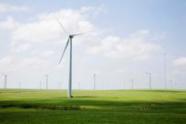 A review of the current literature on bird and
bat issues has just been released.
A review of the current literature on bird and
bat issues has just been released.
Updated: 2003/07/28