Global highways for electric currentFeb 7, 2008 - International Energy Solutions - Engineer Live
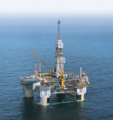
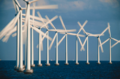
Global demand for electric power will continue to grow significantly in the years ahead, a trend that will seriously impact the expansion of power plant capacities and adaptation of power supply systems. All in all, enormous investments will be necessary in the near future in power generation, and thus also in power transmission. High-voltage direct current transmission (HVDC) will play a major role in this scenario, especially for long-distance links but also for submarine cable links or for interconnecting disparate power supply systems where necessary.
Global population growth and the dynamic development of national economies have resulted in a steady increase in demand for electrical energy over the past few decades, particularly in the newly industrialising nations. According to United Nations forecasts, the world population will grow from over six billion people today to eight billion in the year 2020. By 2100 the earth will be home to around eleven billion people. Global studies show that electricity consumption worldwide is closely related to population growth. Electricity consumption in developing countries and in newly industrialising nations is expected to rise by 220percent in the next twenty years, and by 37percent in the industrialised countries.
While in 2000 the world consumed about 15400billion kilowatt hours of electrical energy, according to industry forecasts this will increase to 25600billion kilowatt hours in 2020. It is no wonder, then, that in the past few years increasing energy demand has been the main driving force behind growth and the expansion of power supply systems. However, as power supply systems become larger and more complex, maintaining a good quality of power transmission becomes a challenge for the network planners. The reasons for this are problems with load flow, with power fluctuations in the network and reduced voltage quality. As a result, if energy is to be transmitted over long distances in interconnected networks, special measures are required to support the network and improve its properties. The large-scale blackouts in America and Europe have shown that despite the theoretical benefits of close coupling of power supply networks, the risk of uncontrolled cascade effects exists in large and heavily loaded synchronous interconnected systems. Further transmission problems are to be expected if renewable sources of energy such as large wind parks are to be incorporated in the network system. The problems arise where the three-phase networks are under-dimensioned and inadequate power reserves are available in the adjacent network. In such cases, innovative power electronic systems can support the network and improve the quality of power transmission. One of the most important applications of power electronics in power supply systems is high-voltage direct current transmission (HVDC). Since the 1960s, it has blossomed into a cost- effective technology with high power capability. Today there are more than one hundred HVDC systems in service worldwide with a power transmission capacity of about 55gigawatts, equivalent to 1.4percent of globally installed power plant capacity. HVDC back-to-back links. This applies, for instance, to the linking of power supply systems operating at different frequencies or with different frequency regulation systems. Cases of this type occur, for example, in South America where 60-Hz and 50-Hz systems operate side by side, as well as in the US (60Hz) and Canada (50Hz), in the Arabian region (Saudi Arabia 60Hz, Kuwait 50Hz) as well as in Asia. In these cases, HVDC back-to-back links are installed for converting alternating current into direct current. The power is then sent by direct current transmission to the power converter located in the direct vicinity in which the reverse process takes place. This process involves conversion from direct current back into alternating current to match the frequency of the system to be connected. The nominal power of an HVDC back-to-back link of this type is usually between 100 and 800megawatts, and is the only possible method for linking asynchronous systems. HVDC long-distance transmission links. The second and most frequent application is the use of HVDC technology for long- distance transmission. No matter how the electrical power is generated, whether by gas, oil or coal-fired systems, nuclear power plants or regenerative sources of energy such as hydro-electric power plants, ever longer distances will need to be spanned in the future to transport the electricity from the power plants to the urban agglomerations. HVDC is the method of choice for spanning distances of over 600kilometres (400miles). From about this distance upwards, HVDC is the most cost-effective solution because the line losses are considerably lower than with ac power transmission. Today it is possible to span distances of 1,000 to 2,000kilometres (600 to 1200miles) with overhead power transmission lines using HVDC. HVDC submarine cable links. The third possible use for HVDC transmission is for submarine cable links. Transmission distances for AC transmission via submarine cables is restricted to 60-80kilometres (40–50miles) because of the charging and discharging of the cable capacitances and the ensuing losses. HVDC transmission is the only solution if longer distances are to be spanned by submarine cable. Today, HVDC systems are possible with submarine cable links longer than 600kilometres (400miles) and a power rating of up to 1,000megawatts, but cable lengths of up to 1,300kilometres (800miles) are already being planned. HVDC projects Siemens used this system to implement the Moyle Interconnector, an HVDC submarine cable link between Northern Ireland and Scotland with a capacity of 500megawatts for bi-directional transmission. The HVDC link not only reinforces the connected power supply systems of the two countries, but also connects Northern Ireland to the European grid and thus enables it to participate in the competition on the energy market. Another Siemens project is the HVDC submarine cable link between the Australian island of Tasmania and the state of Victoria on the Australian continent, which is known as the ‘Basslink’. Both sides benefit from this submarine cable link which went into commercial service in April 2006. Tasmania with its hydro-electric power plant supplies ‘green’ electricity to Victoria from regenerative energy sources, while Tasmania can replenish its base load from the Australian grid. For this reason the HVDC link was designed for transmission in both directions. 500megawatts of power can be transported at a dc voltage of 400kilovolts via Basslink from Georgetown in Tasmania over about 360kilometres (220miles) to Loy Yang (Victoria) and vice versa. The entire order value for this project exceeded E300million. Siemens was awarded the order to supply the two turnkey power converter stations for the Basslink HVDC project from Basslink Pty Ltd. Basslink Pty Ltd was set up by National Grid International, the world’s largest independent transmission system operator as the operating company for the Basslink project. The project was carried out by Siemens and Pirelli Energy Cables & Systems (now Prysmian Energy Cables & Systems) as a consortium, with Pirelli supplying and installing the over 280-kilometre (170miles) long submarine cable. As consortium leader Siemens was responsible for the entire HVDCT technology including power converter valves, converter transformers, smoothing reactors, high-voltage switching stations as well as the communications and control technology. Siemens was also responsible for the construction of the valve halls and the operational building as well as for the erection of the overhead power lines and the transfer points at both ends. HVDC for offshore wind parks Submarine cable HVDC routes are of great interest in view of the large offshore wind parks that are planned. According to present plans, wind parks are to be constructed in the North Sea and the Baltic with a total power output equivalent to the combined output of several nuclear power plants. This electric power generated at sea has to be brought ashore over relatively long distances, and this can only be effected by means of HVDC technology. If the expansion of wind energy continues as planned, it will result in an offshore generation capacity of 20 to 30 gigawatts. By then, if not sooner, Germany will have to start thinking about an HVDC link, for example on the route between Hamburg and Munich capable of transporting 2,000 to 3,000megawatts of power to the south of the German Republic in the future. HVDC control system Another major advantage of high-voltage direct current transmission is that the control system of the transmission system can regulate the flow of power both in terms of power level and the direction of flow very quickly, in a matter of milliseconds. Moreover, no additional short-circuit power is produced when an HVDC system is connected to an existing ac voltage system. That means that existing switching equipment is not overloaded. Consequently HVDC systems, with their ability to regulate the load flow quickly, help stabilise the networks and restrict the extent of any line disturbances, such as major blackouts, that might occur. In such a case connections are automatically disconnected in the grid to prevent the network fault from affecting parts of the system that are still intact. This was the case during the big blackout in North America about two years ago. Quebec’s grid remained intact because of the protective functions of its HVDC links, whereas Ontario, which is connected synchronously to the US, did not escape the blackout. Two years ago Siemens developed a new HVDC control system based on industrial standards as a way of further improving the regulation capability of its HVDC systems and to further simplify operation. The new control system, Win TDC, which has a product life cycle of about 25 years, can be operated via the WinCC operator communication and monitoring system. The control, regulation and protective functions are implemented with the high performance control system Simatic TDC (Technology and Drive Control), which is also used in the sphere of industrial production. The new control system has a considerably higher level of integration compared with existing solutions. For instance, in the future the hardware will only take up half the amount of room in the converter station. The use of standard software and a standard hardware platform also reduces the number of spare parts needed and simplifies troubleshooting. Siemens did not develop this control system solely for installing new HVDC systems, but also for replacing existing systems by using its flexible interface concept. For this purpose, all measured values of the existing HVDC system can be integrated into the fibre-optics-based measuring system of the new control system and further processed. Because of its small space requirement, the new control system could even be installed parallel to the existing one in order to take over control of the HVDC system with as little time delay as possible. The new control system was used for the first time in the Basslink HVDC project, the submarine cable link between the Australian continent and Tasmania, and has proved to be highly reliable from the very beginning. Current developments At the end of May 2007 Siemens launched a high-voltage direct current (HVDC) transmission system on the market, based on a new generation of power converters using voltage-sourced converter (VSC) technology. This HVDC system is suitable for installing dc links up to the 1000MW power range where conventional, line-commutated converters are still used exclusively today. By contrast with line-commutated converter technology the HVDC Plus system operates with disconnectable power semiconductors. As a result the commutation processes in the converter run independently of the system voltage. The transmission system allows the low-loss transport of electrical power from offshore wind parks to the coast and the economical and environmentally benign supply of power to oil drilling platforms from the power supply system on the mainland. Offshore wind parks in the power range of a few hundred megawatts usually require particularly high standards of power transmission. Many wind parks are situated out to sea over a hundred kilometres from the infeed point on the coast. This generally exceeds the economic and technical limits of ac-based power transmission systems and calls for new transmission concepts, for example based on the HVDC Plus system. Oil drilling platforms which have a high power requirement also demand high standards of power transmission if they are to be supplied from the mainland and not locally as in the past. Power supplied from the mainland not only increases the availability of the electric power on the drilling rigs but also renders unnecessary the maintenance and servicing work that is needed on the small power plants used on the platforms at present. This also eliminates environmentally harmful CO2 and NOX emissions from the small power plants usually used at sea. The oil platforms in the North Sea could then be supplied with power, for example by environmentally benign hydroelectric power plants in Norway. Siemens AG, Power Transmission and Distribution (PTD), is based in Erlangen, Germany. www.siemens.com |