 South Asian power transmission link in the worksNov. 22, 2011 - sananews.net 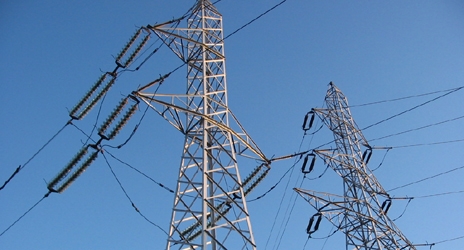
Islamabad(SANA)Electricity trading with Pakistan
is part of a larger plan of a South Asian transmission
link, which will help countries in the sub-continent
harness energy potential of the region. Officials of the two countries are scheduled to meet next month to finalise the issues of tariff and grid connectivity. Electricity trading with Pakistan is part of a larger plan of a South Asian transmission link, which will help countries in the sub-continent harness energy potential of the region. “A formal understanding has been reached between the two countries on sale of electricity. The finer points are being worked out. The grid connectivity across the border would help Islamabad tide itself over,” a senior Indian power ministry official told the newspaper. Officials said both sides were considering setting up transmission infrastructure in a joint ownership to wheel around 500MW of electricity via Amritsar. They said as Lahore has complete transmission lines and grids and is near the grid in Punjab, it will be economical to transfer power through Amritsar. “There is a political will among leaders of the two nations to enhance trade ties and this would work for early solution of issues,” an official said. South Asian electricity trade is being seen as a major area of cooperation among countries that will bring prosperity to the sub-continent by providing power to deficit parts of the region. “South Asia is a major hub of fast-growing economies having 25% of the world’s population. There is an ongoing shift in focus from agriculture to manufacturing. No South Asian country can meet its energy needs entirely from within its own domestic resources. We need to integrate the entire region with a robust power grid,” Indian State Minister for Power, KC Venugopal said. India will need about 250,000MW by 2017, a five-fold increase, to sustain its economic growth. A South Asian grid will give the region 100,000MW of power to trade and help India tap hydropower and natural gas reserves of its neighbours. The grid model connecting Norway, Denmark, Sweden and Finland and another linking South Africa, Botswana and Zimbabwe were being studied. Energy and electricity cooperation are non-traditional areas of trade relationship development, according to a study by the Confederation of Indian Industry. An integration of electricity grids across South Asia will reduce power costs and enhance manufacturing competitiveness of all members. Nepal, Bhutan, Afghanistan and India have huge hydroelectric potential, which can be tapped for intra-regional power trade, the study said. While a transmission link with Bhutan is in place,
there are plans to tweak existing line to enable
imports up to 5,000MW into India by 2020. Indian
firms are working on hydropower projects of 10,000MW
in Bhutan and 1,000MW in Nepal to be able to share
power from these projects. Officials of the two countries are scheduled to meet next month to finalise the issues of tariff and grid connectivity. Electricity trading with Pakistan is part of a larger plan of a South Asian transmission link, which will help countries in the sub-continent harness energy potential of the region. “A formal understanding has been reached between the two countries on sale of electricity. The finer points are being worked out. The grid connectivity across the border would help Islamabad tide itself over,” a senior Indian power ministry official told the newspaper. Officials said both sides were considering setting up transmission infrastructure in a joint ownership to wheel around 500MW of electricity via Amritsar. They said as Lahore has complete transmission lines and grids and is near the grid in Punjab, it will be economical to transfer power through Amritsar. “There is a political will among leaders of the two nations to enhance trade ties and this would work for early solution of issues,” an official said. South Asian electricity trade is being seen as a major area of cooperation among countries that will bring prosperity to the sub-continent by providing power to deficit parts of the region. “South Asia is a major hub of fast-growing economies having 25% of the world’s population. There is an ongoing shift in focus from agriculture to manufacturing. No South Asian country can meet its energy needs entirely from within its own domestic resources. We need to integrate the entire region with a robust power grid,” Indian State Minister for Power, KC Venugopal said. India will need about 250,000MW by 2017, a five-fold increase, to sustain its economic growth. A South Asian grid will give the region 100,000MW of power to trade and help India tap hydropower and natural gas reserves of its neighbours. The grid model connecting Norway, Denmark, Sweden and Finland and another linking South Africa, Botswana and Zimbabwe were being studied. Energy and electricity cooperation are non-traditional areas of trade relationship development, according to a study by the Confederation of Indian Industry. An integration of electricity grids across South Asia will reduce power costs and enhance manufacturing competitiveness of all members. Nepal, Bhutan, Afghanistan and India have huge hydroelectric potential, which can be tapped for intra-regional power trade, the study said. While a transmission link with Bhutan is in place, there are plans to tweak existing line to enable imports up to 5,000MW into India by 2020. Indian firms are working on hydropower projects of 10,000MW in Bhutan and 1,000MW in Nepal to be able to share power from these projects. 
|