
Inside:
Global Endorsements for the GENI Initiative
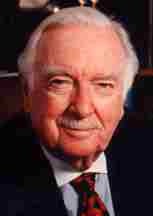
For most of my life, I was privileged to observe and report on the news that affected all of us. As a journalist, I was obliged to remain objective — telling the truth as we knew it, being fair to all. I feel free to suggest — nay, urge — that we give serious attention to an ingenious project that could help relieve much of the danger to our civilization posed by the modern four horseman of the apocalypse: poverty, pollution and population growth, and proliferation of nuclear weapons. Many years ago, I was honored to spend time with a true visionary of our time, Dr. R Buckminster Fuller. He preferred that I call him Bucky. This renaissance man gave us the geodesic dome, the Dymaxion map (a very accurate and unique view of our planet), synergetic mathematics and the World Game™ — a global simulation tool. The answers to this provocative inquiry have given me hope. In particular, the premier solution offers the most thoughtful strategy towards peace and sustainable development that I have seen. Simply stated, the proposal is to interconnect the electrical energy networks between nations and continents, with an emphasis on tapping the abundant renewable energy resources of our planet. In today= s terms, we might call this a world wide web of electricity using green energy resources. Bucky saw this possibility decades before the rest of us. The problems of humanity threaten each of us — yet our ignorance makes us believe that somehow we can remain immune. That just isn= t so. The critical issues we face have time frames much longer than any political term of office. These problems are interconnected, which suggests that the solutions will also be interconnected. We need more comprehensive thinking and long-range global planning. I invite you to investigate the GENI Initiative as I have. It offers hope for all humanity. Walter Cronkite 6 Questions towards Peace and Sustainable Development
Linking Electricity for Peace:
|



Dr. Ruud Lubbers 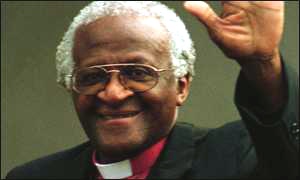
The Most Reverend Desmond
M. Tutu |
East and West Germany connected two months after the fall of the Berlin Wall. Israel and Jordan initiated interconnections after the Washington Declaration. Now electrical inter-ties are also planned between North and South Korea and between Turkey and Iran. As former enemies tear down their walls, they are also building important economic bridges - electrical energy bridges. The reasons are many, but simply stated, the electrical interconnection of power systems offers tremendous economic and social benefit to both parties.
The linking of electrical grids between countries and across continents has proven to increase'' energy efficiency, reduce pollution, increase trade and provide the basic infrastructure of developing nations - supporting clean water, health care and refrigeration systems. And the need for these exchanges has never been greater.
According to the 1996 Annual Report from the World Resources Institute, World Bank, United Nations Environment and Development Programs, our current population of 5.7 billion will grow to 8.3 billion by 2025, 90% of this growth in the urban areas of developing countries with two-thirds living in mega-cities. increasing greenhouse gas emissions and critical water shortages. This is not the world to leave our children, and it's not sustainable. But what other choice do we have?
Over two decades ago, the United Nations and inventor, scientist and mathematician, R. Buckminster Fuller proposed interconnecting regional power system into a single, continuous world electric energy grid. The objective?
To make the world work for 100% of humanity in
the shortest possible time through spontaneous
cooperation without ecological damage or the disadvantage
to anyone.
Why electricity? Because it is the common denominator of all societal infra-systems: food, shelter, health-care, sewage, transportation, communication, education and finance - in short, modem civilization. The goal is to deliver sufficient electrical energy for every human - and to do it sustainably.
Fifty years ago, electric power could only be efficiently transmitted 400 miles. During the 60's, breakthroughs in materials science extended this transmission distance to 1500 miles. This allowed the utilities to interconnect across time zones and compensate for variations in seasonal demand. This buying and selling of power is now common in all developed nations, as utilities desire to level the peaks and valleys of energy demand to save costs and increase reliability.
Today's technology for electrical transmission now extends thousands of miles -- far beyond any political boundaries. This allows power interchange between North and South hemispheres, as well as East and West across continents.
Unfortunately, 82% of all power generation today is non-renewable (coal, natural gas and nuclear), resulting in many of the world's environmental ills - greenhouse gases, acid rain, toxic wastes. Yet enormous potential for hydro, tidal, solar, wind and geothermal sites exists around the world. These renewable resources are site specific and oftentimes remotely located, but now are within economic transmission reach. Much of the world's abundant renewable energy potential exists in the developing countries of Latin America, Africa, and Asia. Tapping these sources of clean energy can elevate everyone's quality of life.
Not surprisingly, the United Nations in 1971 also corroborated the need to interconnect regional power grids, tapping remote renewable resources. Dr. Fuller identifies this strategy as the highest priority objective for the planet. Old Cold War politics used to suppress these international transmission projects. No longer, as enlightened self-interest is beginning to lead foreign policy.
Walter Hickel 
Eng. M Maher Abaza |
Billions of dollars are presently being saved through shared power, and already some of the future demand can be met from wheeled electricity. As deregulation and privatization of utilities proceeds, many new generation options also become available, whether locally based or in neighboring countries. Savings are reflected in smaller electric bills and expanded markets for power producers - a massive win-win situation.
A key environmental question in the first world economies is the replacement choice for present polluting capacity as the economic life of these generators expires over the next few decades. As peak power generation is often purchased from a neighboring utility, the most inefficient, expensive and polluting generators can be phased out.
Today, in first world economies, end-use efficiency is the priority. On the other hand, we must remember that someone living in poverty meets her daily survival needs first, and environmental concerns later in the developing countries demand-side management is difficult when their energy requirement is increasing. As a part of the solution, efficiency improvements are vital, but not sufficient for the future growth trends.
The World Energy Council projects a doubling of primary
energy demand globally in the next twenty-five years
as developing countries grow, both in population and
economically. The Intergovernmental Panel of Climate
Change (IPCC) now confirms the greenhouse effect,
which will worsen if the business as usual
scenarios
prevail. European insurance companies and banks have
seen damage claims triple in the last decade, and
they are now committed to funding renewable project.
The challenge for developing nations is to bypass
the old growth models and move directly into sustainable
development.
The potential of power transmission technology to the developing world is immense. Exports of excess capacity can be purchased by the industrialized world, providing cheaper and cleaner power for the North, and sending needed cash to the South. For example, Maher Abaza, Egypt's Energy Minister proposes an integrated African, Middle Eastern, European network that encircles the Mediterranean Sea.
Comparative trend analysis shows striking improvements
in all major societal indicators as electricity becomes
available for developing societies. When food and
health care systems can be sustained, infant mortality
rates decrease, as do birth rates. When fewer
children die from hunger related causes, fewer insurance
births
are required to ensure care for the elderly.
Projections with statistical merit show trial the
population explosion would plateau and widespread
hunger would end when the energy grid is place.
In fact, research shows the energy threshold for a society moving from daily survival to decent living standards is about 2000 kWh/capita/year. (By comparison, the U.S. average is 12,000 kWh/person/year, and Europeans use half that amount.) Today, over 2 billion people in developing counties live without any electricity at all. They lead lives of misery, walking miles every day for firewood and non-potable water just to survive. What's needed today in most smaller villages are small decentralized generators that can meet basic food, water and health-care needs. Then as development demand increases, these villages can connect into the expanding grid network.
Of critical consequence for the planet, you, and
I, are the energy decisions being made today by India,
China and Southeast Asia. Over half the world's present
5.7 billion population lives there now, and linking
renewable resources is required if we are to reduce
atmospheric emissions in the future. Leading to the
Earth Summit in 1992, Noel Brown of the United Nations
Environmental Program called the energy grid strategy
to be one of the most important opportunities to
further the cause of environmental protection and
sustainable development.
As a high-tech global initiative that benefits everyone,
the energy grid development is ideal, and, since international
cooperation is required, political tensions and fears
are diminished. In Megatrends
, John Naisbitt suggests
that peace is enhanced when friend and foe trade
with one another. Already over 50 nations are
linked with neighboring countries, predominately throughout
Eastern and Western Europe, North America and the
Commonwealth of Independent States.
Today, we have a viable technology, that when developed to its highest potential will:
- increase universal living standards
- promote international cooperation and peace
- reduce fossil fuel demand and the resultant pollution
- relieve the population explosion
- reduce world hunger and poverty
- slow deforestation, topsoil loss, and the spreading of deserts
- open new markets and enhance world trade
- encourage energy efficiency and sustainable development
These interties transcend political differences being economically and environmentally beneficial for connected regions. Given the capital, resources and engineering expertise required, these projects could also lead the economic conversion of some industries idled by Cold War cutbacks.
Bureaucracy, selfish nationalisms and ignorance remain as barriers. Yet in building mutually beneficial power networks, these recent breakthroughs in cooperation between long-time enemies offer hope for a more peaceful and healthy world.
India — Pakistan: from Nuclear Explosions to Trading Electricity
Since their independence from Britain in 1947, India and Pakistan have fought three wars.
In 1998, these hostile neighbors crossed the nuclear threshold, causing global concern and a withdrawal of international lending. A few months later at the World Energy Conference (where GENI exhibited and promoted this specific energy option) the Pakistani Energy Minister offered to provide 2000 megawatts of power each day to India. 1999 brought the delegates together to finalize the details of price, contract duration and transmission corridors.
(World Update, Reuters, 1/26/1999)
If this historic rivalry can be overcome — we can do it anywhere!
What Can You Do?
Global and local activities are needed to accelerate the attainment of the GENI vision. Your participation can take many forms. Please contact the GENI office for more information on any of the following opportunities.
Contribute Your Money
Make a pledge to help bring this vision into reality. We need monthly donors!
You can contribute cash, stocks, real estate, put GENI in your will or create a charitable remainder trust.
GENI has project funding requirements of:
- The GENI Computer Model — $1.6 million
- Film/Documentary
The Powerful Planet
— $325,000 - International Conference — $525,000
GENI is a 501(c)(3) non profit organization. Your contribution is tax-deductible in the United States.
Contribute Your Contacts
We need to reach the key leadership in 190 countries.
Please share this information with your nation's policy-makers, business executives, media and spiritual leaders.
Each of them is looking for new solutions to global problems. Copy this newsletter or send us your referrals.
Contribute your time or expertise:
Bringing an idea to the world needs assistance in many ways. You can write to the editor of your favorite magazine or newspaper (we have excellent opinion editorials for you to submit).
Help market our Web Site http://www.geni.org/ to your favorite news groups and create Hot Links with related sites.
You could book a presentation on the GRID Initiative for your trade association annual meeting or host a fund raising event in your home.GENI Support and Products
Your Financial Support...
|
- Dymaxion™
Globe
Folded from the Dymaxion™ Map, this four-color 6" globe generates conversation on global issues and solutions.
- GENI
Video:
What if... a new global option
This 15 minute video has been seen around the world. Designed for the general public, it's the best overview of the GENI Initiative. Introduction by John Denver.
- GENI
T-shirts
Connect the World with GENI
— three color shirt along with Dymaxion™ Map and Grid is guaranteed to get attention and conversation. White shirts with Map in blue and yellow, Grid and print in red.
- GENI
Brochures
A concise statement on GENI, as well as the benefits in the areas of economics, the environment, international trade and cooperation, hunger and overpopulation. This piece will explain GENI to your firends in 3 minutes.
- GENI
Video:
A WIN-WIN Solution
A 15 minute discussion by ten delegates who participated in the International Workshop in Winnipeg, Manitoba, Canada in July 1991. The consensus statement strongly corroborated the GENI initiative as very credible.It's a win-win proposal for everyone involved.
Joe Falson
- GENI
Technical Package
For the engineer and policy maker, a compendium of reports, thoughtful analysis and policy proposals from IEEE, World Bank and the United Nations. $50 donation.

The Buckminster Fuller Institute owns all rights to the Dymaxion™ Map design. The word Dymaxion™ and the Dymaxion™ Map design are trademarks of the Buckminster Fuller Institute. The Map is copyrighted by the Buckminster Fuller Institute, 1938, and is used here by permission. |
Dymaxion™ MapBeautiful four color poster printed on heavy-gauge paper. 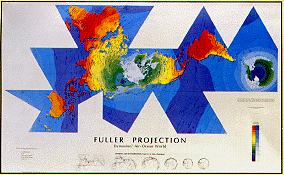
Promises to generate discussions in your home and office. GENI Mission — to accelerate the attainment of optimal, ecologically sustainable energy solutions in the shortest possible time for the peace, health and prosperity of all. GENI is a tax-exempt 501(c)(3) corporation registered in the State of California. |
| A compelling global strategy for peace and sustainable development. |
|
ago, the late R. Buckminster Fuller proposed interconnecting regional power systems into a single continuous global electrical energy grid. • While this vision is still years away, tech- nological advances have made the linking of international and inter-regional energy networks practicable today. • Transmission lines allow utilities to level the peaks and valleys of demand. This is accomplished between East-West time zones, as well as North-South seasonal variations in demand. • The origin of the energy grid initiative emerged as the highest priority of the World Game™. Its stated purpose is “to make the world work for 100% of humanity in the shortest possible time through spontaneous cooperation without ecological damage or the disadvantage of anyone.” Research reveals that these major benefits will result from expanding electrical networks. • Increase in everyone’s stan- dard of living • Reduction of fossil fuel demand and the resultant pollu- tion • Relief of the population explosion • Reduction of world hunger • Enhancement of world trade • Promotion of international cooperation and peace • A prime goal of GENI, Global Energy Network Institute, is to educate all people, especially world leaders, to the potential benefits of this global solution. • |
|
Theodore Von Karman |

How can I support GENI?
