 Policy Options: SubsidiesDesigning Effective Subsidies, A case study ofNepal's Biogas Support Program (BSP) |
THE NETHERLANDS DEVELOPMENT
Organization, has been awarded Climate Technology
award for making outstanding contributions
in the protection of environment. About
60,000 biogas plants have been built and are
in operation in Nepal.
|
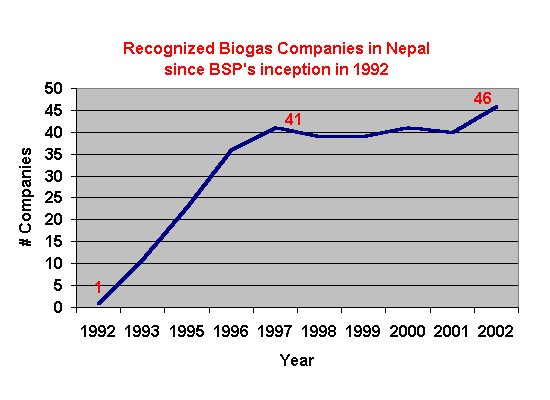
BSP is praised for its cost-effective program design; US$103 for flat areas, $147 for hilly districts and $176 for the remote hills (CRS). The financial incentives, technical support provided to manufacturers and heightened public demand helped increase the number of recognized biogas companies from 1 in 1992 to about 46 today. Since the policy's inception in 1992, these companies have built more than 103,922 plants.
The success of BSP can be attributed to: the monitoring, evaluation and quality control mechanism of the plants, "active training of biogas technicians and skilled labor " (UNESCAP), proper channeling of the subsidy and loan money, and the manufacturers' use of a single quotation to make the cost of a plant stable.
This program effectively enhanced the production and use of a renewable resource. Biogas substituted energy resources (i.e. firewood, dung, kerosene) that emitted considerable carbon dioxide emissions and caused major health problems. Replacing firewood use with biogas also positively influenced social inequities by reducing the time and hard labor women spend collecting firewood for cooking and cleaning.
The BSP was implemented in 1992 by a joint effort between the Nepalese government, Netherlands Development Organization and Dutch Development Corporation, Agricultural Development Bank of Nepal and the Gobar Gas Company (in Nepal).
Resources:
Center
for Resource Solutions
United Nations' analysis of BSP's success
Nepal's Biogas Program: Reason for Success in Nepal